Water Wise Gardens Redefined with Gravel and Minimal Water
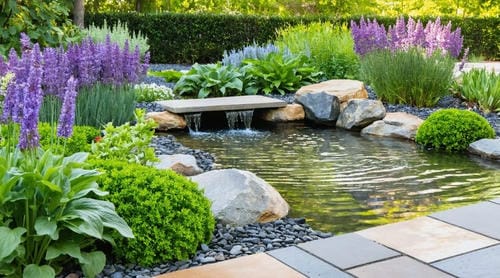
Gardening practices are evolving rapidly in response to climate change, increased water scarcity, and the cost of maintaining traditional lawns and lush landscapes. Among the most influential trends reshaping gardens across the United States and beyond is the shift toward landscapes that thrive on stone, gravel, and minimal irrigation. Sometimes referred to as xeriscaping or drought-tolerant landscaping, this approach focuses on purposeful design, resilient plant selection, and materials that reduce water use while maximizing aesthetic appeal.
The Principles and Appeal of Gravel-Centric, Low-Water Gardens
At the heart of drought-tolerant garden design is the principle of conserving water without sacrificing beauty or ecological function. Xeriscaping—derived from the Greek word xeros, meaning dry—has emerged as a foundational design philosophy for water-wise landscaping. Traditional lawns, which require frequent irrigation, are increasingly viewed as unsustainable in arid and drought-prone regions. Xeriscaping replaces these high-water demand areas with thoughtfully composed plantings and hardscape elements such as gravel, stones, and permeable surfaces that reduce both water use and maintenance needs. Studies show that xeriscaping can decrease landscape water consumption by up to 75 percent compared to conventional designs. [1]
A fundamental aspect of these gardens is careful planning and site assessment. Designers analyze soil type, sun exposure, wind patterns, and existing topography to determine how water moves across the site and which areas are most suitable for different plant groupings. Proper categorization of plants into “hydrozones”—clusters based on similar water requirements—allows for efficient irrigation and prevents overwatering.
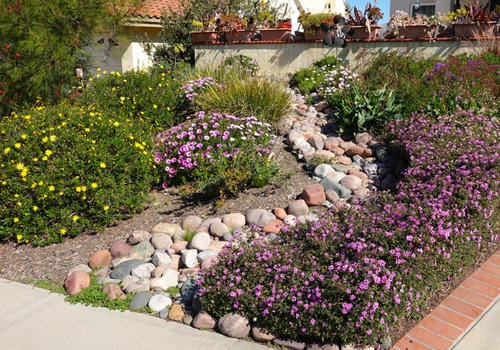
The soil itself is a critical part of the design. While it may seem counterintuitive in a gravel garden, improving soil structure enhances water retention around plant roots, reducing the need for frequent irrigation. Incorporating organic matter—such as compost—into the soil improves moisture holding capacity, supports deeper root development, and promotes healthier, more resilient plantings. Coupled with strategic mulching, whether organic or rock-based, evaporation is slowed, and competition from weeds is suppressed, contributing to a lush and well-established garden.
Plant selection defines the success of any minimal-water garden. Drought-tolerant plants—such as succulents, cacti, Mediterranean herbs (e.g., lavender and rosemary), and ornamental grasses—excel in dry conditions thanks to adaptations like water storage tissues, reduced leaf surface area, and deep root systems. These plants require little supplemental watering once established, yet contribute a rich variety of forms, textures, and seasonal visual interest. [2] Native species are particularly advantageous, as they have evolved to thrive with local rainfall patterns and contribute to regional biodiversity by attracting pollinators such as bees and butterflies.
Functionality is equally important. Gravel pathways, decomposed granite patios, and permeable pavers allow rainwater to infiltrate the soil rather than running off, while also providing structure and flow within the landscape. Rainwater harvesting systems, such as rain barrels or cisterns, further enhance water efficiency by capturing rainfall for use during dry periods.
Emerging Design Trends: Aesthetic Innovation Meets Eco-Conscious Landscaping
Designers and homeowners are increasingly embracing drought-tolerant landscaping not as a purely functional choice but as a compelling aesthetic direction. Recent design trends demonstrate how gravel, stone, and low-water plants can be integrated into a wide range of stylistic expressions that elevate outdoor spaces beyond traditional expectations.
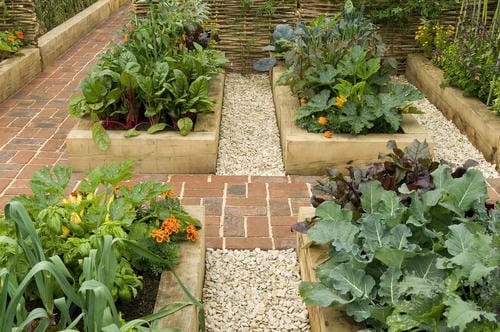
One influential trend is the blending of modern design principles with desert and xeric aesthetics. Movements such as “desert modernism” emphasize clean lines, open spaces, and sculptural plantings—such as agave and cacti—set against materials like decomposed granite, Corten steel, and natural stone. This style celebrates minimalist design while drawing inspiration from the surrounding environment, particularly in arid regions where water scarcity is a defining condition of the landscape. [3]
Another trend gaining traction is “soft modernism,” where the hardness of stone and geometric forms is softened by naturalistic plantings. In this approach, ornamental grasses and perennials spill gently into hardscape spaces, creating a balanced fusion of structure and organic movement. This technique enhances ecological value and visual interest without negating the water-wise philosophy fundamental to drought-resilient gardens.
Across these trends, gravel remains a versatile material. It functions as ground cover to replace turfgrass, forming paths that reduce water runoff and weed growth while guiding visitors through the garden. Gravel also acts as a design element that unifies different planting zones and creates a cohesive visual narrative, particularly when combined with larger rocks or boulders that serve as focal points. [4]
Although minimalist design remains popular, there is a growing emphasis on landscapes that feel connected to their ecological context rather than strictly stylized. Such designs often incorporate edible drought-tolerant plants—such as rosemary, sage, or certain fruit trees—bringing practicality and beauty together in one space. These gardens not only conserve water but also provide food, fragrance, and seasonal interest.
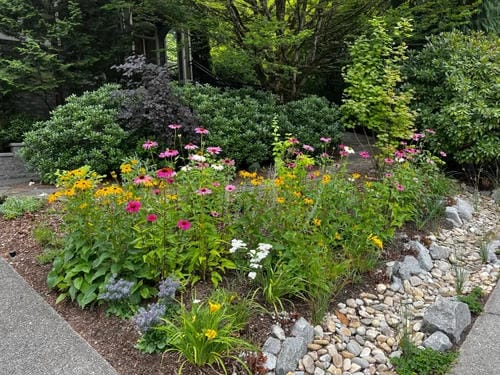
Beyond aesthetics and sustainability, these gardens respond to broader environmental concerns. In fire-prone regions, firewise xeriscaping incorporates fire-resistant plants and non-combustible hardscaping to reduce risk. Pollinator-friendly plantings support local ecosystems by offering resources for beneficial insects, contributing to biodiversity even in the driest settings.
Creating a successful stone-forward, low-water garden requires balancing design ambition with ecological sensitivity. Overreliance on gravel without adequate soil preparation or living plant material can lead to heat island effects and other unintended consequences. Thoughtful integration of soil, plants, and hardscape elements—grounded in a clear understanding of local conditions—ensures that these gardens flourish as living landscapes rather than static installations. [5]
Sources:
[1]: https://en.jardineriaon.com/xerogardening.html
[2]: https://planetdesert.com/blogs/news/xeriscaping-guide-drought-tolerant-landscaping-design
[3]: https://www.homesandgardens.com/gardens/desert-modernism-garden-design-trend
[4]: https://www.itsoverflowing.com/xeriscape-ideas
[5]: https://www.homesandgardens.com/gardens/xeriscaping-mistakes
References:
https://xeriscapingbasics.com/xeriscaping-design-principles
https://gardensnursery.com/all-about-xeriscape-and-xeriscaping
https://www.hawaiidws.org/wp-content/uploads/2024/11/Guide-for-Non-Invasive-Xeriscaping-Plant-Choices.pdf
https://desertfoothillsgardens.com/what-are-the-current-trends-in-xeriscaping
Recommended for you