Gardens of Earth: How Climate and Culture Grow Together
Across the world, gardens are more than collections of plants; they are living expressions of how people have learned to grow beauty and sustenance within the limitations and opportunities of their local climates. From the arid expanses of the Middle East to the temperate islands of East Asia, gardening traditions reflect both environmental necessity and cultural philosophy, evolving over millennia into distinctive forms that tell stories about the places and people who cultivate them. Ancient gardening traditions illustrate this fundamental interplay: Early gardens in the Near East were shaped by arid conditions and the human imperative to harness water, while classical European and Asian gardens reflected wetter climates and differing cultural priorities. In fact, the broad traditions that have dominated gardening since ancient times include the Persian and Islamic gardens of the Near East, Mediterranean gardens influenced by Roman and Renaissance aesthetics, and the Chinese and Japanese gardens shaped by East Asian philosophies and seasonal climates.
Climates and Garden Ideals: Traditions Shaped by Weather and Geography
In hot, dry climates where water is scarce and sunlight intense, gardens developed techniques and styles that mitigate environmental stress and provide lush, cool refuges. The paradise garden concept that originated in ancient Persia — with its symmetrical layout (chahar bāgh) centered around water features and enclosed walls — arose as a response to desert and semi-desert climates, using irrigation and shade to create a sense of an oasis in harsh surroundings. Water served not only practical cooling purposes but also spiritual symbolism, representing life and tranquility in regions where these attributes were precious. This style spread widely through the Islamic world — from Iran to Spain and India — adapting to local materials but always emphasizing water channels, fountains, and aromatic plantings that could thrive in dryness.
Similarly, Mediterranean climates — characterized by mild, wet winters and hot, dry summers — produced garden traditions that emphasize drought-tolerant plants, shade structures, and multifunctional spaces that combine utility with beauty. Mediterranean gardens, from Italy to Spain and across similar climatic zones in California and South Africa, frequently include olive trees, aromatic herbs, stone terraces, and xeric landscaping that reflects both environmental constraints and cultural values of outdoor living. The region’s garden designs blend aesthetic order with agricultural productivity, often incorporating edible plants alongside ornamentals in a way that celebrates both sustenance and style. [1]
In stark contrast, the moist climates of East Asia shaped garden traditions rooted in harmony with nature and contemplation. Chinese gardens, such as the classical gardens of Suzhou, were designed as microcosms of the natural world, using rocks, water, and native plantings to simulate landscapes within confined spaces. These gardens were deeply connected to philosophical values — including Taoist and Confucian principles — emphasizing balance, symbolism, and a poetic interpretation of nature’s forms. In Japan, the evolution of garden design incorporated Shinto and Buddhist influences, creating spaces that often emphasize asymmetry, seasonal change, and spiritual reflection through minimalistic plantings and carefully arranged natural materials. Such designs reflect the wetter, more seasonal climates of East Asia, where mosses, water-loving trees, and delicate flowering plants flourish. [2]
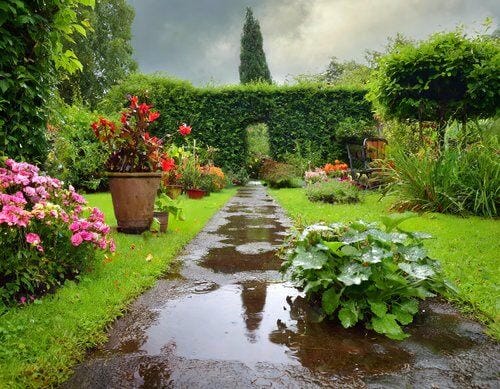
Temperate climates with distinct seasons, such as those found in much of Europe and North America, also gave rise to gardening traditions that embrace biodiversity and seasonal cycles. In the United Kingdom, cottage gardens with mixed plantings of ornamental and edible species arose in settings where rainfall and moderate temperatures allowed a wide variety of plants to thrive together. British garden traditions later influenced colonial and modern garden styles, emphasizing lawns, perennial borders, and a celebration of seasonal bloom patterns that mirror the changing year. [3]
Cultural Expression Through Local Gardens: Regional Traditions and Practices
While climate sets the stage, cultural values and historical experiences determine how gardens are used and what they signify within a society. In many parts of the world, gardens are not simply aesthetic additions to a landscape; they are integrated into daily life, ceremonies, community structures, and even philosophical outlooks. In the Caribbean and parts of the tropics, Creole gardens — known locally as jardin de case — reflect a multi-strata agroforestry system that blends diverse plant species for food, medicine, and shelter. These gardens serve a subsistence function and embody cultural resilience and adaptation to tropical climates, where abundant rainfall and warm temperatures support dense, productive plantings. The interweaving of indigenous, European colonial, and immigrant traditions in these gardens showcases how cultural diversity interacts with climatic conditions to shape gardening practices.
In Mexico, traditional gardening and agricultural systems such as milpas — rotating intercropping of maize, beans, and squash — illustrate how climatic and cultural knowledge combine to support sustainable food production. While not strictly ornamental gardens in the Western sense, these integrated systems demonstrate how gardening traditions are inseparable from food culture and local climatic rhythms, especially in tropical and subtropical regions where growing seasons can be year-round.
In North Africa and the Middle East, garden traditions often revolve around creating shaded courtyards and water-rich microclimates within urban and domestic spaces. Moroccan garden styles, for instance, emphasize central water features and enclosed courtyards that reduce heat and invite social interaction amidst geometric tilework and lush plantings — a direct response to hot desert surroundings and a cultural focus on hospitality and communal leisure. [4]
European garden history also highlights how horticulture has adapted to both climatic zones and cultural ideals over time. Formal Renaissance gardens in Italy, with their terraces, fountains, and geometric layouts, were designed to complement palatial architecture and reflect a humanist view of nature as orderable and expressive of intellectual mastery. French formal gardens, exemplified by grand parterres and long avenues, extended this philosophy into grand public and royal landscapes that harmonized with the temperate climates of Western Europe.
In East Asia, the Chinese and Japanese garden traditions emphasize not only climatic adaptation but also deep cultural symbolism. Chinese gardens use water to represent life and stones to signify mountains, weaving these elements into designs that embody harmony between heaven and earth. Japanese gardens often reflect seasonal shifts — from cherry blossoms in spring to maples in autumn — using plant species that thrive in local conditions to highlight nature’s cyclical beauty. These garden forms are not merely landscapes; they are philosophical spaces meant to invoke contemplation, spiritual reflection, and a sense of unity with the natural world. [5]
Even within similarly temperate climates, gardeners’ cultural preferences yield varied outcomes. In Russia’s colder regions, dacha gardens combine practicality with beauty, focused on food production with fruit trees and vegetables that can withstand harsh winters, often supplemented with greenhouses to extend growing seasons. Such gardens reflect the necessity of storing food for long winters and the cultural value placed on self-sufficiency and seasonal preparation.
Throughout Africa, Asia, Europe, and the Americas, gardens manifest how cultural beliefs, religious symbolism, historical narratives, and environmental conditions converge in living landscapes. Whether designed for meditation, sustenance, leisure, or symbolic expression, gardens serve as cultural artifacts that reveal the priorities and identities of the communities that nurture them. In each case, the climatic context — from rainfall patterns and temperature ranges to soil types and seasonal variability — influences not only plant selection but also spatial organization and seasonal use.
Sources:
[1]: https://www.finegardening.com/article/inspiration-from-a-mediterranean-garden
[2]: https://whc.unesco.org/en/list/813
[3]: https://thewanderingplantsman.com/gardening-culture-around-the-world
[4]: https://positivebloom.com/the-worlds-gardens-are-as-diverse-as-its-people-take-a-look-inside
[5]: https://pearl.reading.ac.uk/traditional-gardens-around-the-world-copcas-2023-student-blog
References:
https://ucanr.edu/site/uc-master-gardener-program-contra-costa-county/article/gardening-mediterranean-climate-zone
https://evergladesark.com/2024/11/15/the-evolution-of-japanese-gardens-exploring-dramatic-cultural-influences-part-2/art/knappdds
https://positivebloom.com/the-worlds-gardens-are-as-diverse-as-its-people-take-a-look-inside
https://www.europeanproceedings.com/article/10.15405/epsbs.2022.03.27
Recommended for you