Living Spaces That Feel Intuitive Because They Study and Anticipate Your Habits
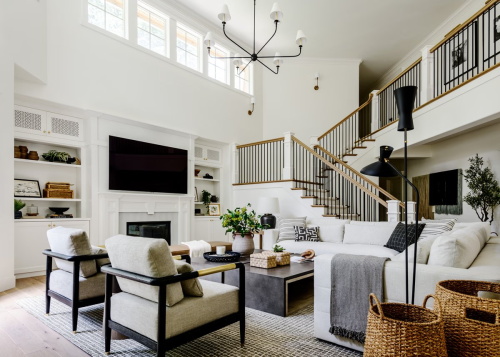
In the realm of home and lifestyle, the integration of artificial intelligence into living spaces has moved far beyond novelty gadgets and flashy tech demos. Today’s AI-enhanced environments are designed not merely to answer voice commands or follow preset schedules, but to learn, predict, and respond to individual rhythms and preferences in ways that transform routine into seamless experience. This shift reflects a broader evolution from reactive automation — where devices await instruction — to proactive adaptation, where smart spaces anticipate needs and make adjustments without explicit input. Across heating and lighting to security and personalized comfort, AI systems are quietly shaping how we move through the day.
The Intelligence Behind Everyday Comfort and Ease
At the core of these intelligent spaces are interconnected sensors, machine learning models, and data analytics that work in concert to understand user behaviors. For instance, smart thermostats such as the Nest Learning Thermostat collect patterns of temperature adjustment and occupancy over time, allowing them to fine-tune climate control based on learned preferences and schedules rather than rigid programming. Over weeks of use, this adaptive behavior optimizes comfort while also reducing energy consumption, making the house responsive to human presence and absence alike. In effect, the environment senses actions like leaving for work before you do and transitions the home into energy-saving “away” mode before you step out the door. Similarly, advanced lighting systems can adjust brightness and color temperature based not just on time of day, but on whether occupants are awake, reading, or preparing dinner, creating ambience that aligns with life’s flow rather than fixed parameters. [1]

This degree of personalization extends into devices that interpret natural language more fluidly. With the infusion of sophisticated language understanding, routine triggers are no longer bound to precise phrases — a casual “I’m ready to wind down” can now prompt a sequence of actions such as dimming lights, lowering blinds, adjusting climate, and playing calming audio. Systems powered by advanced models can infer user intent from context and nuance, making interactions feel less like issuing commands and more like communicating with an intuitive assistant. [2] This evolution positions AI not just as a controller of functions, but as a conversational partner in daily life, translating human goals into orchestrated environmental responses.
Transforming Rituals into Predictive Interactions
As smart spaces mature, they move beyond single-purpose automation to predictive interaction. This is the stage where the environment begins to discern patterns and proactively prepares for daily activities based on historical data and contextual cues. Imagine your home adjusting blinds and softening lighting as the sun sets, or gradually warming floors and brewing coffee shortly before you typically wake — all functioning without explicit scheduling. These kinds of anticipatory behaviors are becoming foundational to modern living spaces, shifting the technology from “nice to have” to genuinely time-saving and comfort-enhancing. [3]

Predictive capabilities draw on a range of inputs: environmental sensors track occupancy and movement; connected devices map routine behaviors; wearable integrations signal biometrics such as sleep cycles; and calendar data informs expected absences or activity periods. Future implementations could integrate weather forecasts, biometric feedback, and even mood recognition to tailor environments in real time. For example, systems might modulate lighting and soundscapes based on detected stress levels or recommend climate settings that support alertness during work hours or deeper rest at night.
Beyond comfort and convenience, predictive AI also enhances operational efficiency. Energy analytics can identify usage inefficiencies across appliances and guide automated adjustments that trim costs and environmental impact. Smart security systems utilize computer vision and anomaly detection to distinguish between routine household movement and potential threats, reducing false alerts and creating tailored safety profiles for each home. [4] In these ways, smart spaces function as dynamic partners in daily life, continuously refining their responses to align with learned preferences and environments.

Yet the journey to truly intuitive automation is not without challenges. Developing systems that respect privacy, maintain data security, and avoid intrusive behaviors requires careful design. The promise of a home that understands you must be balanced with ethical data stewardship and transparent control options for residents. Homes that adapt and learn should empower inhabitants, not surveil them. As these technologies proliferate, thoughtful implementation and user agency will be pivotal to their acceptance and success.
While we may not yet live in a world where the home anticipates every need effortlessly, the trajectory is clear: AI-enhanced environments are redefining how domestic spaces interact with human life. By integrating predictive learning, natural language understanding, contextual awareness, and adaptive personalization, these smart spaces offer a tangible glimpse into a future where daily rituals are not just automated, but understood and shaped in harmony with individual lifestyles. They are living systems that respond, adapt, and evolve — blurring the line between environment and assistant.
Sources:
[1]: https://appinventiv.com/blog/ai-in-smart-homes
[2]: https://reelmind.ai/blog/gemini-google-assistant-routines-ai-for-smart-home-automation
[3]: https://infiniticube.com/blog/the-future-smart-houses-in-2025
[4]: https://logiciel.io/blog/smart-home-ecosystem-ai-ar-data-2025
Reference:
https://www.afootinthefuture.com/ultimate-smart-home/smart-routines
Recommended for you