Movement Shapes the Way We Live at Home
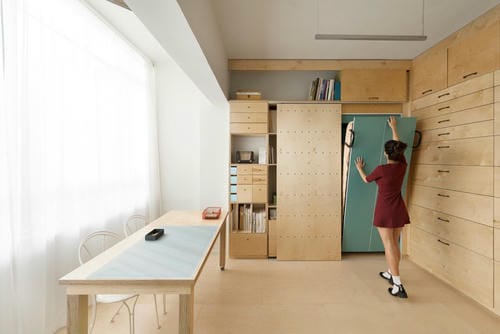
For decades, conventional home organization has leaned heavily on the idea that belongings belong in boxes, bins, baskets, and cabinets. This “Storage Wars” mindset — where the emphasis is on corralling things into containers and stashing them away — has shaped how many homeowners and decorators think about function: identify a thing, find a place for it, and hide it from view. Yet, as interior design evolves in 2026, professionals and enthusiasts alike are challenging this paradigm. A growing number of designers argue that organization shouldn’t be about accumulating containers; it should be about orchestrating movement and experience within a space. Rather than thinking in terms of boxes, today’s most compelling interiors conceive of organization as flow — the intuitive movement of people, activity, and energy through a home. This shift reframes interiors from static repositories of objects into dynamic environments that support how we actually live.
The New Philosophy of Functional Interiors
At the core of this philosophy is the concept of spatial flow: the deliberate design of circulation, pathways, and connections that allow inhabitants to move naturally through a space. Flow isn’t just about walking from point A to point B; it’s about how design elements — walls, furniture, lighting, views — guide the eye and body in ways that feel seamless and intuitive. Designers now talk about creating homes where daily rituals unfold effortlessly, where living spaces feel connected rather than compartmentalized, and where every movement — from entering the front door to making morning coffee — feels coherent. Studies in interior design note that achieving intuitive movement within a home enhances comfort, functionality, and emotional well-being. A space with good flow “guides occupants smoothly from one area to another,” reducing friction and fostering harmony between different rooms and activities.
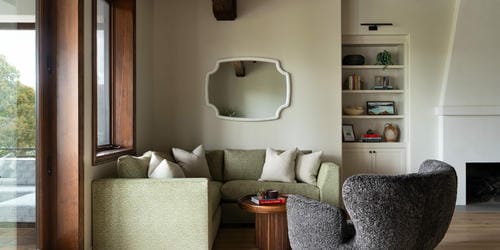
This emphasis on spatial experience underscores a wider trend in design theory: space itself is more than just physical square footage; it’s a medium for lived experience. In architectural discourse, scholars contend that interior spaces deliver cultural meaning and affect how people work, rest, and interact within a building. An interior’s spatial arrangement — how it distributes functions like movement, socializing, cooking, and resting — defines the way inhabitants relate to it over time. [1] Furthermore, spatial organization principles suggest that interiors should allow for dynamic circulation patterns and adaptive use, not just designated storage zones or compartments.
Reorienting how we think about interior organization requires a shift in perception. Instead of seeing storage as the solution to disorder, designers encourage homeowners to view organization as a narrative of movement. Ask questions like: How do we enter this home? How do we transition from the kitchen to the living area? What does the line of sight look like when moving through the corridor? These questions shift attention from where things are stored to how space functions for people.
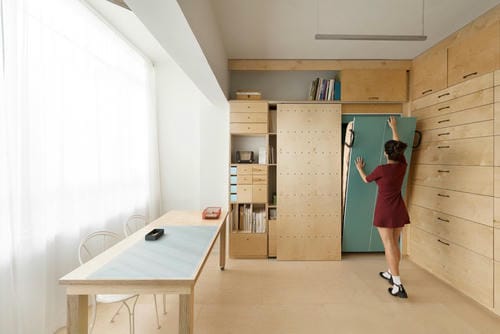
In functional interiors of the future, storage still matters — but its role is integrated into the flow narrative, not the container narrative. Built-in shelving that doubles as an architectural feature, furniture with hidden compartments that reinforce logical pathways, and multifunctional pieces that serve both utility and movement are common implementations. Instead of a closet filled with separately labeled boxes, a space may feature a wardrobe that naturally aligns with the entrance transition, enabling ease of dressing without disrupting circulation. Gone are the days when organization was synonymous with cramming items into boxes; today’s approach prioritizes clarity of movement and the elimination of visual or physical barriers.
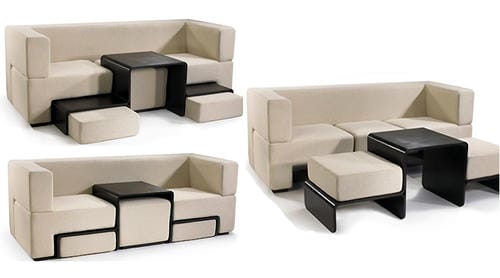
This emerging perspective marks a profound redefinition of “organization” in interior design: it is no longer a static act of placing items into storage, but a fluid choreography of human behavior, spatial logic, and environmental cues.
Designing Through Movement: Principles and Practices
Translating the idea of spatial flow into actionable design involves several core principles. First, clear and intuitive pathways are central. Good design anticipates the natural lines of movement — the desire lines that occupants take — and ensures they are unobstructed. Interior designers often study how people move through a home before placing furniture or storage elements, aiming to ensure that transitions from one area to another feel effortless. [2] Rather than orienting a sofa or cabinet because it “fits” a wall, designers consider how that piece affects navigation and whether it facilitates or inhibits fluid movement. [2]
Space planning, the blueprint of design before decoration, also plays a defining role. This process involves organizing a room’s layout to optimize both function and flow. It balances clear circulation with purposeful zones, ensuring that pathways feel natural and that spaces connect logically. The objective is to design an environment where functionality — daily use and human activity — is embedded in the very geometry of the layout, not retrofitted through storage solutions.
Another key principle is balance between positive and negative space. Positive space refers to areas occupied by objects — furniture, fixtures, and accessories — while negative space is the open, unoccupied area that allows movement and breathing room. Designers emphasize leaving intentional negative space because it enhances movement and prevents chaos from creeping into a home’s visual and physical experience. [3]
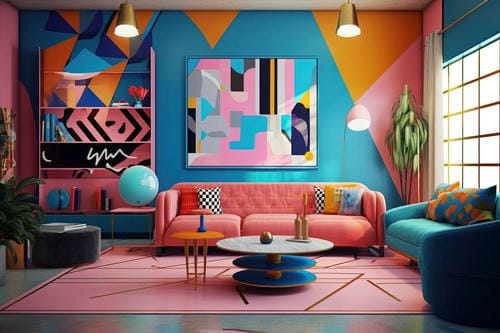
Strategic use of furniture, color, lighting, and architectural elements also contributes to flow. For example, aligning seating with sightlines toward windows or art can create visual pathways that guide the eye and establish an underlying sense of connection between spaces. Lighting can reinforce paths of movement, subtly directing attention and enhancing the perception of space. A well-lit hallway or transition zone feels inviting, whereas a poorly lit, cluttered passage can inhibit movement and create psychological resistance.
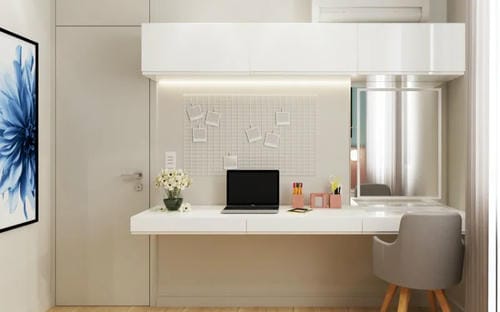
Importantly, many designers view flow not as a rigid prescription but as an adaptive framework that responds to how people live and use their homes. While built-in storage and cabinets are not inherently dismissed, they are integrated in ways that do not interrupt flow. A sequence of wall storage might be designed as an architectural rhythm that reinforces a natural path — for instance, slim recessed storage along a corridor that supports passage without obstruction. Multifunctional furniture, such as benches with hidden storage that double as seating in circulation zones, is deliberately configured to support movement while also addressing organization.
In open-plan homes, flow becomes even more crucial. Instead of strictly separated rooms with boxed storage areas, modern layouts are designed around zones that fade into one another. Designers use rugs, lighting distinctions, and subtle material shifts to define these zones without interrupting movement between them. This approach ensures that every part of the home feels connected to the whole, reinforcing coherence across spaces and activities. [4]
Modern designers also place emphasis on flexibility. Homes today serve multiple functions — work, play, rest, and socializing — and a rigid, container-based approach to organization cannot adapt quickly enough to these shifting needs. By focusing on flow and adaptability, interiors can transform fluidly throughout a day, responding to different activities without feeling cluttered or compartmentalized.
From this perspective, organization and storage are not ends in themselves; they are supporting elements of a larger spatial system. The objective is to cultivate interiors where people move with ease, where daily rituals unfold with minimal friction, and where storage enhances rather than disrupts the movement narrative of a home.
Sources:
[1]: https://www.nature.com/articles/s41599-018-0088-6
[2]: https://daatify.com/oliviajones/article/flow-interior-design
[3]: https://eclectic-niche.com/explaining-the-7-elements-of-interior-design
[4]: https://beginwithdesign.com/blog/the-art-of-room-flow-designing-interiors-that-feel-connected
References:
https://www.whereisthenorth.com/article/9-spatial-organization-principles-to-follow-while-designing
https://www.room-genius.com/blog/what-is-space-planning
Recommended for you